Introduction
In the world of ancient coin collecting, there is a consensus: “Huizong coins are unparalleled.”
Song Huizong Zhao Ji, known as the “artistic emperor” who was distracted by the throne, not only mastered calligraphy, creating the unique “slim gold script,” but also minted coins during his reign that are renowned for their exquisite craftsmanship, beautiful fonts, and diverse types. Coins like Chongning Tongbao, Daguan Tongbao, and Zhenghe Tongbao have become highly sought after in the ancient coin collecting community, often fetching prices in the tens of thousands.
However, few know that among the many coins minted by Huizong, there is one particularly special type, minted for a very short period, with a scarce quantity and mysterious types, including unverified “hidden versions.” This is the Chonghe money.
Chonghe money consists of Chonghe Tongbao and Chonghe Yuanbao, minted in the first year of Chonghe (1118 AD). It was only produced for three months before being abruptly discontinued due to a change in the era name. This brief minting period makes Chonghe money one of the rarest and most mysterious varieties among Huizong’s coins, with many collectors never having seen a complete specimen of Chonghe Yuanbao.
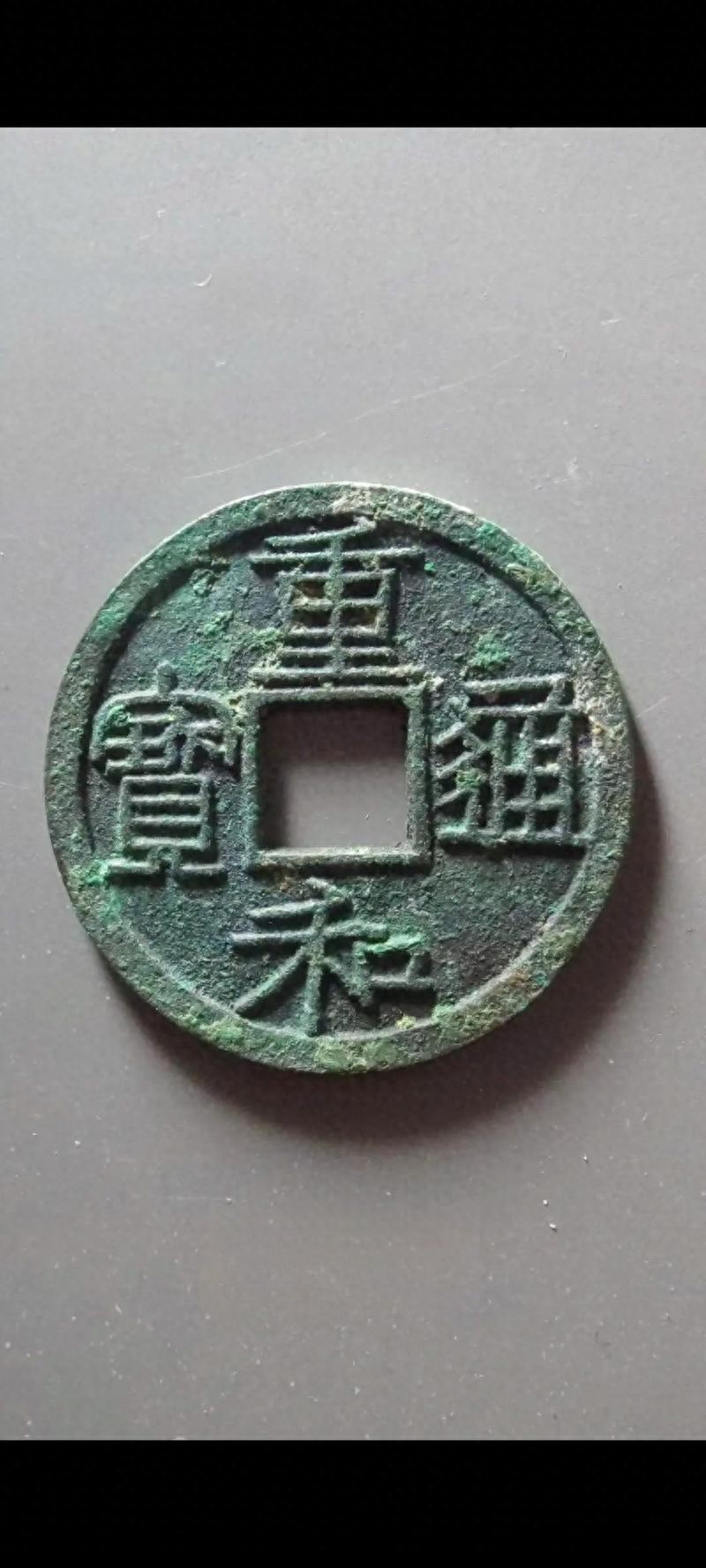
Many people may have an old coin inscribed with “Chonghe” lying in an old wooden box or wardrobe at home. It may look rusty and unremarkable, even mistaken for ordinary scrap copper and carelessly discarded or sold cheaply. Little do they know that this small coin could be a Chonghe Tongbao worth thousands, and if it is the rare Chonghe Yuanbao, it could be considered a “unique item” that would spark a frenzy among collectors, with its value being immeasurable.
Today, we will delve into the history and significance of Song Huizong’s Chonghe money in a comprehensive 5000-word article—covering its minting background, variations, surviving quantities, market value, controversial versions, authentication techniques, and a beginner’s guide to avoid pitfalls. Whether you are a novice collector or a budding enthusiast, this article will help you understand the collecting secrets of Chonghe money and unlock the hidden wealth around you.
I. Origins: The Birth of Chonghe Money
To understand the value of Chonghe money, we must first discuss its minting background, which is closely tied to Huizong’s artistic obsession and the brief era name “Chonghe.”
During his 25-year reign, Song Huizong used six era names: Jianzhong Jingguo, Chongning, Daguan, Zhenghe, Chonghe, and Xuanhe, each corresponding to minted coins. The era name “Chonghe” was the shortest, lasting only three months (from November 1118 to February 1119), before being abolished due to court disputes and replaced with “Xuanhe.”
Why was the Chonghe era so short? The answer lies in a little-known history. In the first year of Chonghe, Huizong was engrossed in artistic creation, focusing on painting and ceramics, neglecting state affairs. Political strife escalated, and the border situation was tense with the Jin state threatening. The era name “Chonghe” symbolized a desire for peace, but it did not materialize. Ultimately, under the counsel of ministers, Huizong had to abolish the Chonghe era and change to “Xuanhe” in hopes of restoring peace and stability.
The short duration of the Chonghe era directly led to the limited minting time for Chonghe money—only three months, resulting in an extremely limited quantity of coins minted nationwide. After nearly 900 years of wars, wear, and destruction, very few complete specimens remain intact. This scarcity is one of the core reasons for the high value of Chonghe money.
Additionally, the minting of Chonghe money reflects Huizong’s artistic obsession. Huizong was proficient in calligraphy and painting, demanding high standards for the minting process and aesthetic appeal of the coins. He personally participated in the design, incorporating his slim gold script into the coins, making each Chonghe coin a fine piece of art.
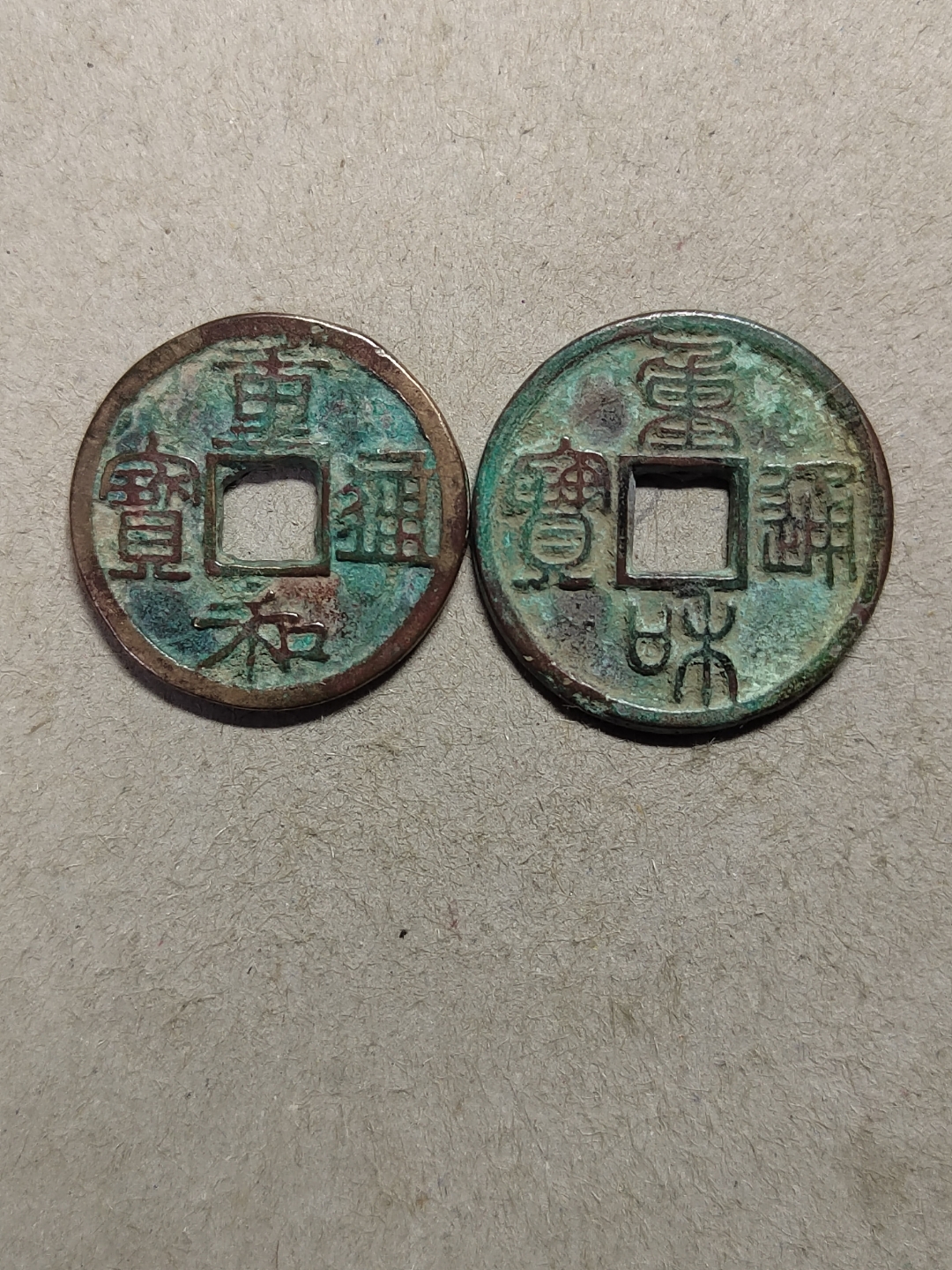
Unlike other Huizong coins, Chonghe money features both clerical and seal script fonts, using a “paired coin” format—where the clerical and seal script coins are identical in shape, size, and weight, differing only in font. This is a notable characteristic of Song dynasty coins. The paired format is vividly represented in Chonghe money, with the clerical script being dignified and the seal script being elegant, showcasing the charm of Song dynasty calligraphy and enhancing the artistic value of Chonghe money beyond that of ordinary ancient coins.
It is worth noting that the minting of Chonghe money occurred during the peak period of Song dynasty coin minting technology, with high-quality copper materials used. The coins produced had clear and deep fonts, well-structured designs, and smooth edges, showing no signs of burrs. Even after nearly 900 years, the exquisite craftsmanship remains evident. This is another key reason why Chonghe money stands out in the collecting market and is highly sought after by collectors.
Some may wonder: with so many coins minted by Huizong, why is Chonghe money so scarce? The answer is simple: short minting time, limited surviving quantity, and significant wear. The three-month minting period, compared to other era names (like Zhenghe, which lasted eight years), was fleeting. The quantity minted was inherently limited; coupled with nearly 900 years of historical changes, wars, floods, fires, and human destruction, very few Chonghe coins remain intact, especially those in good condition with original patina, making them even rarer.
II. Detailed Analysis: Chonghe Tongbao
Among Chonghe money, Chonghe Tongbao is the relatively more common type (here, “common” refers to its relative scarcity compared to Chonghe Yuanbao; in reality, the surviving quantity of Chonghe Tongbao is still very limited, making it hard for ordinary collectors to encounter). It was the mainstream coin minted in the first year of Chonghe, with both clerical and seal script fonts. Currently, the only known version is the plain back small coin, with no other derivative versions, which is a notable characteristic of Chonghe Tongbao.
Next, we will analyze Chonghe Tongbao in detail from four aspects: font characteristics, specifications, grading, and market value, helping you quickly recognize this “potential collectible” and avoid mistaking a high-value treasure for ordinary scrap copper.
(A) Core Features of Chonghe Tongbao
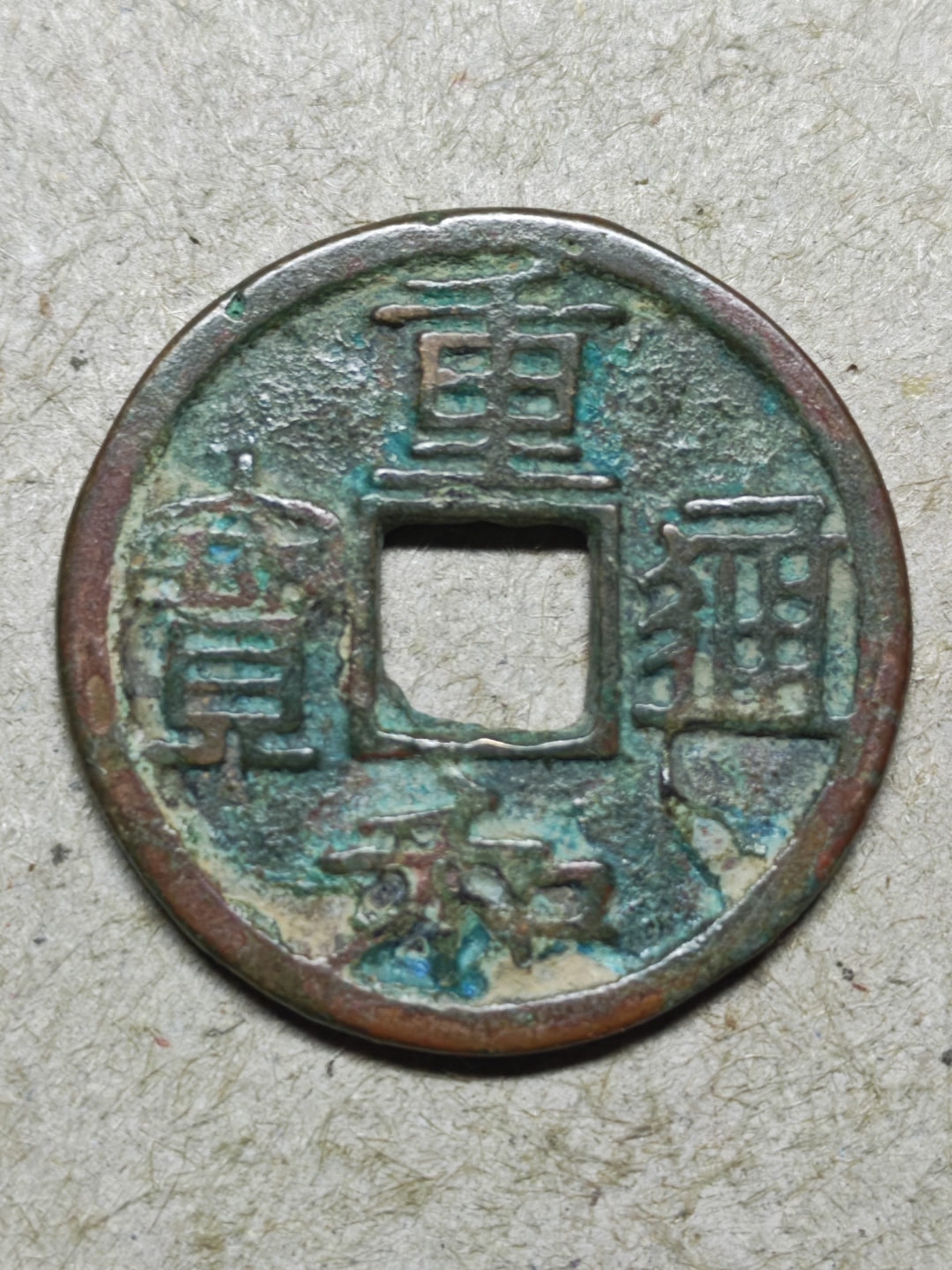
Chonghe Tongbao has a single version, primarily divided into clerical and seal script fonts, both having identical shape and specifications. You can quickly determine whether your coin is an authentic Chonghe Tongbao by comparing the following features.
-
Font Characteristics:
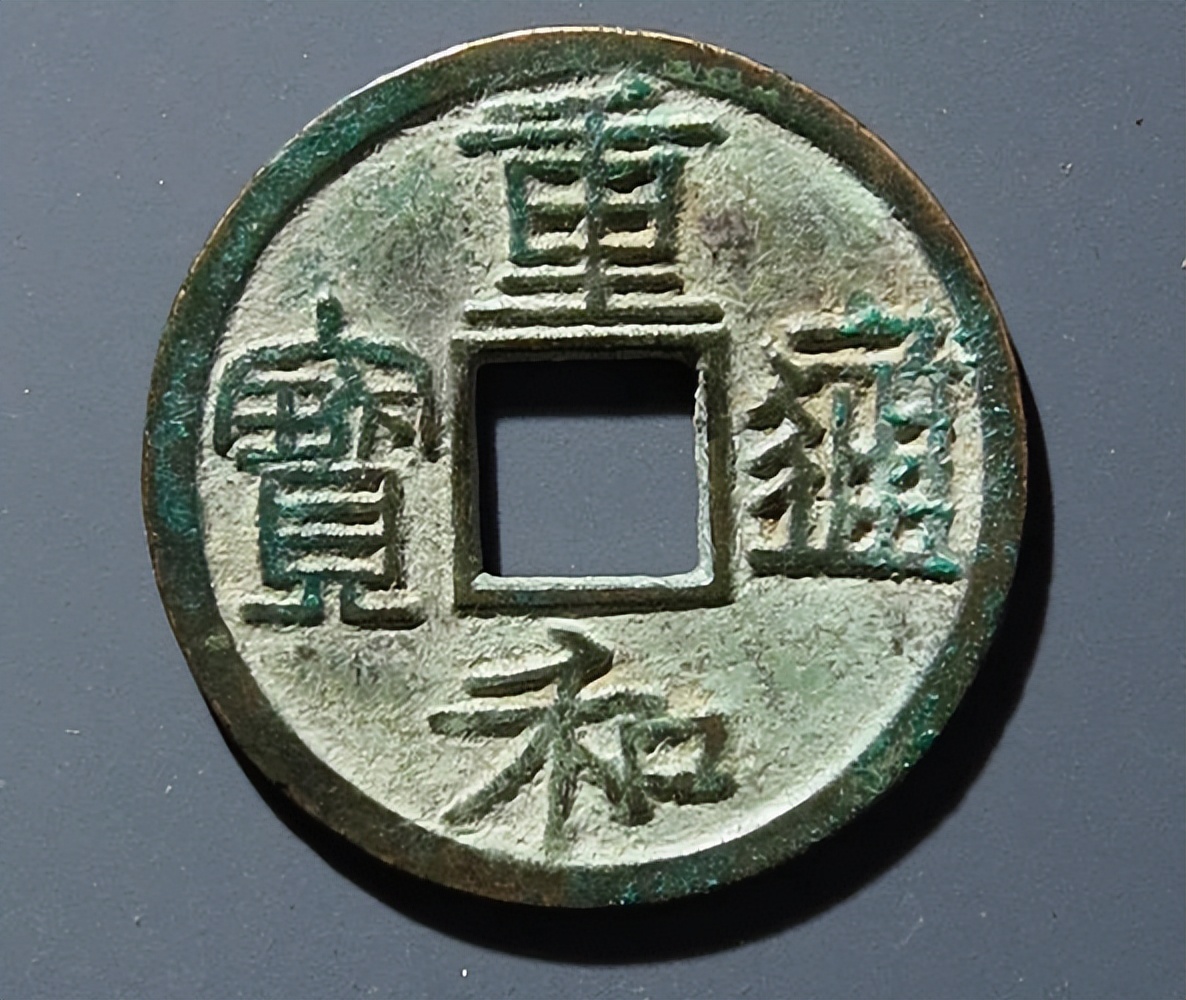
- Clerical Script Version: The front displays the four characters “Chonghe Tongbao” in clerical script, which is dignified and atmospheric, with clear and strong strokes, and a well-structured layout. The strokes of the character “Chong” are even, “He” is symmetrical, “Tong” has a smooth and rounded bottom, and “Bao” is full and robust, showcasing the charm of clerical script while incorporating the fluidity of Song dynasty calligraphy without any stiffness.
- Seal Script Version: The front displays the four characters “Chonghe Tongbao” in seal script, which is ancient and elegant, with fine and even strokes and smooth lines. The characters “Chong” are symmetrical, “He” has a compact structure, “Tong” has flowing lines, and “Bao” has a well-proportioned shape, presenting the beauty of seal script. The two styles contrast sharply yet complement each other.
It is important to note that the fonts of Chonghe Tongbao, whether clerical or seal script, show no signs of blurring or connecting strokes; the strokes are clear and deep, and the strength is uniform, reflecting the peak minting craftsmanship of the Song dynasty, making it difficult for counterfeit coins to replicate accurately.
-
Specifications: Chonghe Tongbao only has the small plain coin format, with no larger denominations like the folded two, three, or five versions (the rumored folded two version has not been officially certified and will be discussed in detail later). The standard specifications are as follows (with tolerances not exceeding 0.2 mm and 0.2 g):
- Diameter: approximately 24-25 mm;
- Thickness: approximately 1.2-1.4 mm;
- Weight: approximately 3.5-4.5 g;
- Coin material: primarily bronze, with a small quantity of brass (the brass version is even rarer and more valuable);
- Reverse: plain back with no patterns or text, which is another important feature of Chonghe Tongbao, and no versions with reverse patterns or text have been discovered.
-
Patina Characteristics: The patina of genuine coins is naturally formed, smooth and warm after nearly 900 years of oxidation, with uniform color, mostly in yellow-green, dark red, or dark brown tones, showing no significant color differences. When lightly rubbed, it does not lose color and has a distinct sense of age, with a delicate patina texture, devoid of harshness or dryness. Due to the scarcity of Chonghe Tongbao, many collectors artificially age them to create fake patina. Artificially aged patina shows uneven colors, with some areas darker and others lighter, appearing harsh and dry. Rubbing may easily cause color loss, and it lacks the natural sense of age, appearing very deliberate upon close inspection.
(B) Grading of Chonghe Tongbao
The condition of Chonghe Tongbao is one of the core factors determining its market value. Even among Chonghe Tongbao, the price varies greatly based on condition; some can sell for tens of thousands, while others may only sell for a few thousand or even less. Based on the experience of seasoned collectors and market realities, we classify the condition of Chonghe Tongbao into four grades for you to assess your coin’s condition.
- Damaged: Severe damage, fractures, or rust, making the font nearly unrecognizable, with seriously missing edges, and only a partial outline visible. Such coins have almost no collectible value and are mostly kept as specimens, priced below 5000 yuan.
- Poor: Noticeable wear and rust, with blurred fonts and missing strokes, and edges with chips or deformation. This condition shows clear signs of artificial treatment (like cleaning or polishing). These coins have low collectible value, priced between 5000-10000 yuan, suitable for beginners to accumulate experience.
- Circulated: Light wear and oxidation on the surface, with clear fonts, complete overall shape, and regular edges, without chips or deformation. The patina is naturally warm and even, with no significant signs of artificial treatment. This type of Chonghe Tongbao is the most common in the market, with moderate collectible value, priced between 10000-30000 yuan (the small to mid-ten thousand range), making it a popular choice for novice collectors.
- Near Uncirculated/Uncirculated: Almost no circulation, with slight oxidation, clear and complete fonts and edges, no wear or rust, and a naturally delicate patina with uniform color, retaining the original state from minting, even showing the minting luster. This type of Chonghe Tongbao is extremely rare, with high collectible value, priced between 30000-50000 yuan (the mid-ten thousand range) or even higher, making it a target for seasoned collectors.
It is important to note that the price difference between the clerical and seal script versions of Chonghe Tongbao is not significant, primarily depending on condition; the brass version is priced 20%-30% higher than the bronze version due to its lower surviving quantity.
(C) Recent Market Prices of Chonghe Tongbao
To give you a clearer understanding of the market value of Chonghe Tongbao, we have compiled recent auction cases and market transaction records from 2025-2026 for your reference, helping you assess the value of your Chonghe Tongbao and avoid being misled.
- In May 2025, at an ancient coin auction in Beijing, a clerical script version of Chonghe Tongbao (circulated) was sold for 18000 yuan after several rounds of bidding.
- In September 2025, at a collection auction in Shanghai, a seal script version of Chonghe Tongbao (high-quality circulated) was sold for 25000 yuan.
- In January 2026, at a local ancient coin auction in Hangzhou, a brass version of Chonghe Tongbao (near uncirculated) reached a sale price of 42000 yuan.
- In April 2026, on an online collection platform, a clerical script version of Chonghe Tongbao (poor condition) sold for 8000 yuan, while a seal script version of Chonghe Tongbao (uncirculated) with perfect condition and natural patina sold for 55000 yuan, setting a new record for recent Chonghe Tongbao transactions.
These transaction cases indicate that the market value of Chonghe Tongbao is relatively stable, with little fluctuation, primarily depending on condition and material. Circulated coins are concentrated in the small ten thousand range, while near uncirculated and uncirculated coins are in the mid ten thousand range. As the enthusiasm for ancient coin collecting continues to rise, the prices of Chonghe Tongbao are also climbing, indicating considerable potential for appreciation in the future.
III. Unveiling: Chonghe Yuanbao—A Rare Treasure
If Chonghe Tongbao is the “potential stock” among Chonghe money, then Chonghe Yuanbao is the “ceiling” and a rare treasure in the ancient coin collecting community. Minted concurrently with Chonghe Tongbao, it is even scarcer, with no public auction records, and the discovered versions are considered “national treasures” with immeasurable value.
Many collectors spend their entire lives without ever seeing a complete Chonghe Yuanbao, and even many seasoned collectors have only seen references in historical texts, never the actual item. This has made Chonghe Yuanbao one of the most mysterious and scarce varieties in the ancient coin collecting community, and once it appears, it will undoubtedly trigger a frenzy among collectors, potentially setting new records in Huizong coin collections.
Next, we will thoroughly unveil the mysteries of Chonghe Yuanbao, covering its versions, materials, surviving quantities, and collectible value, helping you understand the unique charm of this “rare treasure.”
(A) Core Features of Chonghe Yuanbao
Chonghe Yuanbao was minted concurrently with Chonghe Tongbao, sharing similar minting backgrounds and processes, but it has distinct differences in font, shape, and material. You can quickly distinguish between Chonghe Yuanbao and Chonghe Tongbao by comparing the following features:
-
Font Characteristics:
- Clerical Script Version: The font is more expansive and atmospheric than that of Chonghe Tongbao, with thicker strokes and greater strength. The character “Chong” has robust strokes, “He” is spread out, “Yuan” is simple and elegant, and “Bao” is full and rounded, giving the overall font a more imposing presence, contrasting sharply with the clerical script of Chonghe Tongbao.
- Seal Script Version: The font is more delicate and flowing than that of Chonghe Tongbao, with smooth and natural lines. The characters are symmetrical, with a compact structure, showcasing the artistic flair of seal script more vividly.
-
Specifications: Chonghe Yuanbao, like Chonghe Tongbao, only has the small plain coin format, with no other denominations. The reverse is also plain, without any patterns or text. Its standard specifications are nearly identical to those of Chonghe Tongbao, with a diameter of approximately 24-25 mm, thickness of approximately 1.2-1.4 mm, and weight of approximately 3.5-4.5 g, making it difficult to distinguish by shape alone; the differentiation relies on font and material.
-
Material Characteristics: (Key!) This is the most critical difference between Chonghe Yuanbao and Chonghe Tongbao, and the key reason for the high value of Chonghe Yuanbao. All known Chonghe Yuanbao are made of precious metals, with no copper versions discovered (copper Chonghe Yuanbao has not been publicly revealed, possibly never minted or extremely rare).
- Seal Script Version: All known versions are made of pure gold, with a golden hue, a warm texture, and natural patina. The fonts are clear and deep, showcasing exquisite craftsmanship, qualifying them as “national treasures.” The surviving quantity of gold Chonghe Yuanbao is extremely limited, with fewer than 5 known specimens.
- Clerical Script Version: All known versions are made of pure silver, with a silver-white hue, fine texture, and natural oxidized patina. The fonts are clear and the craftsmanship is excellent, with fewer than 10 known specimens, making them also rare treasures.
It is important to note that both the gold and silver versions of Chonghe Yuanbao were palace minted and not circulating currency, primarily used for royal rewards and sacrifices, hence their limited minting and surviving quantities.
(B) Surviving Quantity and Collectible Value of Chonghe Yuanbao
Due to the extremely limited surviving quantity of Chonghe Yuanbao, and all being made of precious metals, there are currently no public auction records, making it challenging to accurately estimate their market value. However, based on the assessments of seasoned collectors and market conditions for ancient coins, the value of Chonghe Yuanbao has long surpassed that of ordinary Huizong coins, making it “priceless.”
-
Surviving Quantity Analysis: Both Chonghe Yuanbao and Chonghe Tongbao were minted for three months, and both were palace minted, with inherently limited quantities. After nearly 900 years of historical changes, wars, wear, and destruction, very few remain intact. Currently, fewer than 5 gold seal script Chonghe Yuanbao are known, and fewer than 10 silver clerical script Chonghe Yuanbao are known. No copper versions have been publicly revealed, suggesting they were either never minted or have all been destroyed, resulting in a surviving quantity of zero.
This extreme scarcity makes Chonghe Yuanbao the “ultimate goal” in the ancient coin collecting community, with many collectors willing to spend significant sums searching for them, yet still unable to find them. Some collectors have stated that just seeing a complete specimen of Chonghe Yuanbao, even if it is silver, would make their life complete.
-
Collectible Value Analysis: Although there are no public auction records for Chonghe Yuanbao, based on the market conditions for similar precious metal ancient coins and the estimates of seasoned collectors, its value is roughly as follows:
- Silver Clerical Script Chonghe Yuanbao (circulated): Due to its scarcity and being made of silver, its value is estimated to be over 500,000 yuan. If it is near uncirculated or uncirculated, its value is expected to be between 800,000 to 1,000,000 yuan.
- Gold Seal Script Chonghe Yuanbao (circulated): With its extremely limited surviving quantity and being made of gold, its value is estimated to be over 1,000,000 yuan. If it is a perfect specimen with natural patina, its value could reach between 1,500,000 to 2,000,000 yuan or even higher.
- Copper Chonghe Yuanbao: If a copper version is discovered in the future, even if it is damaged, it would be a significant discovery in the ancient coin collecting community, with an estimated value of over 500,000 yuan. If it is a complete specimen, its value would be immeasurable, potentially breaking the collection records for Huizong coins.
It is worth mentioning that the value of Chonghe Yuanbao lies not only in its rarity and precious metal material but also in its artistic and historical significance. It is the ultimate manifestation of Huizong’s artistic talent and the pinnacle of Song dynasty minting craftsmanship, carrying nearly 900 years of historical change, making it irreplaceable in historical and cultural value, which is the core reason for its desirability among collectors.
IV. Controversy: The “Hidden Versions” of Chonghe Tongbao
In the collecting community of Chonghe money, there has been a persistent rumor: Chonghe Tongbao not only has the plain back small coin version but also rumored versions of folded two and paired face coins, which have not yet received official certification and have become hot topics of discussion.
Many collectors claim to have seen the folded two version and paired face coins of Chonghe Tongbao, with some even presenting supposed “specimens.” However, the authenticity of these specimens has been widely debated and has not received general recognition from authoritative coin grading institutions (like NGC, PCGS) and seasoned collectors, thus remaining in the “rumored” stage without formal inclusion in the Chonghe Tongbao version system.
Next, we will discuss these two controversial versions in detail, helping you understand the truth behind them and avoid being misled by false information.
(A) The Folded Two Version: A Rumored “High Denomination Version”
The folded two coin is a common denomination in Song dynasty coins, with a diameter of approximately 28-30 mm and a weight of about 7-8 g, equivalent to two small plain coins. Many collectors speculate that Chonghe Tongbao should also have a folded two version, as other Huizong coins like Chongning Tongbao, Daguan Tongbao, and Zhenghe Tongbao have such versions.
The rumored folded two version of Chonghe Tongbao is said to be larger than the small plain coin, with a diameter of approximately 28-29 mm and a weight of around 7.5 g, featuring the same font as the small plain coin, divided into clerical and seal script types, with a plain back and no patterns or text, resembling an enlarged version of the small plain coin.
Unfortunately, there are currently no authoritative historical records documenting the minting of the folded two version, nor have any certified specimens been discovered. Most so-called “folded two versions” on the market are likely forgeries, either enlarged imitations of the small plain coin or altered versions of other Huizong coins. Careful examination can reveal the differences.
Seasoned collectors indicate that the minting time for Chonghe was only three months, and the main minted variety was the small plain coin for daily circulation. Minting a folded two coin would require more copper and more time, making the probability of its minting extremely low. Therefore, the so-called “folded two version” is likely a collector’s speculation or a counterfeit coin.
However, some collectors believe that the folded two version may have been a trial coin used for testing minting techniques, never officially released in bulk, thus its surviving quantity is extremely limited and remains undiscovered or unverified. If a certified folded two version is found in the future, it would undoubtedly break the collection records for Chonghe money, and its value would be immeasurable.
(B) The Paired Face Coin: A Rare “Error Coin”
The paired face coin is a special type of ancient coin, where both the front and back have no text or patterns, or both sides display the same text. These coins typically result from minting errors, classified as “error coins,” with extremely limited surviving quantities and high collectible value.
The rumored paired face coin of Chonghe Tongbao is said to have both sides plain, with no text or patterns, matching the small plain coin’s specifications, with a diameter of approximately 24-25 mm and a weight of about 3.5-4.5 g, with minting techniques similar to ordinary Chonghe Tongbao, but without any inscriptions, representing a minting error.
Like the folded two version, there are no authoritative historical records or certified specimens for the paired face coin, and most so-called “paired face coins” on the market are likely forgeries, either altered by removing text from ordinary Chonghe Tongbao or directly imitating plain coins to deceive collectors.
However, some collectors believe that the paired face coin does exist but is extremely rare, currently only held by a few collectors without public exposure, thus lacking official certification. If a specimen surfaces and is authenticated by an authoritative institution, it would become a rare version of Chonghe money with significant value.
(C) Collecting Reminder: Beware of Counterfeit Controversial Versions
As the collecting enthusiasm for Chonghe money continues to rise, many counterfeit coins have emerged, especially targeting the rumored folded two and paired face coins. Unscrupulous individuals exploit collectors’ enthusiasm to forge these controversial versions, using “scarcity” and “high price” as bait to deceive collectors, leading many novices to fall victim and regret their purchases.
Here is an important reminder: Currently, only the plain back small coin version (clerical and seal script) of Chonghe Tongbao has been officially certified, while the folded two version and paired face coin have not been certified. Most of these versions on the market are likely counterfeit; do not purchase blindly.
If you encounter coins claiming to be “Chonghe Tongbao folded two version” or “Chonghe Tongbao paired face coin,” be cautious and do not easily believe them. It is best to seek authentication from professional coin grading institutions or seasoned collectors to confirm their authenticity before considering a purchase, avoiding being deceived.
V. Pitfall Guide: Four Techniques to Easily Identify the Authenticity of Chonghe Money
As the collecting enthusiasm for Chonghe money continues to rise, the prevalence of counterfeit coins has increased, especially for Chonghe Yuanbao, due to its limited surviving quantity. Many counterfeiters forge gold and silver Chonghe Yuanbao, luring collectors with low prices.
Based on the experience of seasoned collectors and professional identification methods, we summarize the techniques of “Look, Measure, Verify, and Check,” which are simple and easy to understand, allowing even novice collectors to master them easily, ensuring they do not buy counterfeit coins and waste money.
(A) Look: Observe Fonts, Patina, and Patterns
The fonts, patina, and patterns of genuine coins have distinct characteristics, while counterfeit coins are mostly imitations and difficult to replicate accurately. This is the most obvious difference between authentic and counterfeit coins and is the easiest identification technique to master.
- Look at the Fonts: The fonts of genuine coins (whether clerical or seal script) are clear, deep, and evenly weighted, with no signs of blurring, connecting strokes, or typos. The clerical script is dignified, and the seal script is ancient and elegant, showcasing the charm of Song dynasty calligraphy. Counterfeit coins often have stiff, clumsy fonts with uneven strokes, and some may even have missing strokes or typos, making them easy to identify upon close inspection.
- Look at the Patina: The patina of genuine coins is naturally formed, smooth and warm after nearly 900 years of oxidation, with uniform color and no significant color differences. When lightly rubbed, it does not lose color and has a distinct sense of age, with a delicate texture. Counterfeit coins often have artificially aged patina, appearing uneven and harsh, with color differences. Rubbing may easily cause color loss, and they lack the natural sense of age.
- Look at the Patterns: Chonghe money has a plain back with no patterns or text; the reverse of genuine coins is smooth and flat, with regular edges and no burrs or flaws. Counterfeit coins may have obvious burrs, flaws, or artificially created patina traces, and some may even forge patterns or text to impersonate other versions.
(B) Measure: Measure Diameter, Thickness, and Weight
The specifications of Chonghe money are fixed. By measuring the diameter, thickness, and weight and comparing them to standard parameters, you can quickly determine authenticity, as counterfeit coins often do not meet the standards.
Here are the standard parameters for Chonghe money (with tolerances not exceeding 0.2 mm and 0.2 g):
- Small Plain Coin (Chonghe Tongbao and Chonghe Yuanbao): Diameter approximately 24-25 mm, thickness approximately 1.2-1.4 mm, weight approximately 3.5-4.5 g.
- Rumored Folded Two Version (not certified): Diameter approximately 28-29 mm, weight approximately 7.5 g (for reference, currently no authoritative standard).
Counterfeit coins often have diameters, thicknesses, and weights that do not meet standards, either being too small or too light, or too large or too heavy. For example, counterfeit Chonghe Tongbao may have a diameter of only about 22 mm and weigh less than 3 g, making them significantly smaller and lighter than genuine coins. Counterfeit silver Chonghe Yuanbao may weigh more than genuine coins and may not be pure silver, making careful measurement essential for identification.
It is recommended to carry a caliper and an electronic scale when acquiring Chonghe money to measure its diameter, thickness, and weight, comparing them to standard parameters to quickly assess authenticity and avoid being deceived.
(C) Verify: Test Material to Distinguish Authentic Precious Metal Versions
This is the core technique for distinguishing the authenticity of Chonghe Yuanbao and the most critical step. All known Chonghe Yuanbao are made of gold or silver, with no copper versions, so testing the material can quickly determine authenticity.
- Identifying Silver Chonghe Yuanbao: Genuine coins are made of pure silver, with a silver-white hue and fine texture. When lightly struck, they produce a clear sound without a dull tone. Counterfeit coins are often made of silver-plated or alloy materials, appearing dull and rough, producing a dull sound when struck, and are attracted to magnets (pure silver is not magnetic).
- Identifying Gold Chonghe Yuanbao: Genuine coins are made of pure gold, with a golden hue and warm texture. When lightly rubbed, they reveal a bright golden luster, and a light bite will leave a slight mark (pure gold is relatively soft). Counterfeit coins are often made of gold-plated or alloy materials, appearing dull without natural gold luster, and do not leave bite marks, often being much lighter than genuine coins.
It is important to note that due to the high value of Chonghe Yuanbao, the counterfeiting techniques are becoming increasingly sophisticated. Relying solely on visual inspection and simple methods may not completely determine the authenticity of the material. It is best to seek professional testing from institutions, such as spectral analysis, to confirm whether the material is pure gold or silver, avoiding deception.
(D) Check: Verify Versions, Sources, and Craftsmanship
In addition to the above three methods, you can further verify the authenticity of Chonghe money by checking versions, sources, and craftsmanship, especially for the rare Chonghe Yuanbao, which requires careful verification.
- Check Versions: The versions of Chonghe money are fixed; Chonghe Tongbao only has the plain back small coin version (clerical and seal script), and Chonghe Yuanbao only has gold seal script and silver clerical script small plain back versions, with no other derivative versions. You can search online for version information on Chonghe money and compare it to your coins. If the version characteristics do not match, it can be concluded that it is a counterfeit coin.
- Check Sources: When acquiring Chonghe money, always choose reputable channels, such as legitimate collection shops, auction houses, or officially authorized collection platforms. These channels provide legally sourced coins and can offer relevant authentication certificates, effectively preventing the purchase of counterfeit coins. Avoid buying from street vendors, unqualified online stores, or WeChat groups, as these channels often have many counterfeit coins, and many sellers use “low prices” and “scarcity” to lure collectors.
- Check Craftsmanship: Genuine coins have exquisite minting craftsmanship, with clear fonts and regular edges, without obvious flaws like burrs, bubbles, or rough edges. Counterfeit coins often have rough minting craftsmanship, with blurred fonts and many burrs, and some may even have bubbles or flaws, making them easy to identify. For example, counterfeit coins may have blurred strokes and edges with obvious burrs, lacking the exquisite craftsmanship of genuine coins.
If you are unable to determine the authenticity of Chonghe money, the safest approach is to seek authentication from professional coin grading institutions (such as NGC, PCGS). Coins that have been professionally graded will have clear grading reports, effectively preventing the purchase of counterfeit coins while also increasing their collectible value.
VI. Collecting Advice: How New Collectors Can Start with Chonghe Money
For many new collectors, facing rare collectibles like Chonghe money can be overwhelming. They may worry about buying counterfeit coins, overpaying, or not being able to appreciate their value. Based on the advice of seasoned collectors, we have compiled the following suggestions for new collectors to help them avoid pitfalls and easily acquire Chonghe money.
(A) Be Rational, Avoid Blind Fads, and Act Within Your Means
First, new collectors should recognize that while Chonghe money has high collectible value and potential for appreciation, it also carries significant risks, especially Chonghe Yuanbao, which is not only expensive but also has many counterfeits, making it easy to fall victim. Therefore, before acquiring, it is essential to view it rationally, avoiding being misled by terms like “high price” and “appreciation,” and not to follow trends blindly. Determine whether to acquire and which grade of collectible to pursue based on your financial capacity.
If you are a novice collector, it is not advisable to directly acquire high-priced Chonghe Yuanbao or blindly pursue rumored versions like the folded two or paired face coins. Instead, start with ordinary condition Chonghe Tongbao, which is relatively low-priced (in the small ten thousand range) and poses lower risks, allowing you to familiarize yourself with the characteristics and identification methods of Chonghe money, accumulating collecting experience. Once you have a certain foundation and financial capacity, consider acquiring higher-priced rare versions of Chonghe Tongbao or Chonghe Yuanbao.
Additionally, new collectors should not harbor a mindset of “getting rich overnight.” Collecting ancient coins is a long-term process requiring patience and accumulation; it cannot be achieved overnight. Many seasoned collectors have spent years accumulating to obtain complete specimens of Chonghe money. New collectors should take their time to learn and accumulate knowledge to progress further in their collecting journey.
(B) Prioritize Legitimate Channels, Avoid Counterfeits, and Request Certificates
When acquiring Chonghe money, the channel is crucial. Legitimate channels can effectively prevent the purchase of counterfeit coins, which is something new collectors must pay close attention to. Always choose reputable collection channels, such as legitimate collection shops, auction houses, or officially authorized collection platforms. These channels provide legally sourced coins and can offer relevant authentication certificates, such as grading reports or invoices, enabling effective consumer protection in case of issues.
Avoid purchasing from street vendors, unqualified online stores, or WeChat groups, as these channels often have many counterfeit coins, and many sellers use “low prices” and “scarcity” to entice collectors. For instance, some sellers may alter ordinary Huizong coins to impersonate Chonghe Tongbao and sell them at high prices, while others may forge gold and silver versions of Chonghe Yuanbao to lure collectors with low prices, leading many novices to fall victim due to lack of identification skills.
Moreover, when purchasing Chonghe money, always request relevant certificates, such as invoices or grading reports, to facilitate future consumer protection. If a seller refuses to provide certificates or offers various excuses, be cautious and refrain from purchasing to avoid being deceived.
(C) Focus on Condition, Prioritize Original Patina and Good Quality, Reject Artificial Aging
For Chonghe money, condition determines value. Therefore, when acquiring, it is essential to pay attention to the coin’s condition, prioritizing near uncirculated or uncirculated coins, and choosing those with original patina and no wear or rust. Coins with original patina not only have better condition but also greater collectible value and appreciation potential. In contrast, artificially aged Chonghe money may appear to be in good condition but are often counterfeit or replicas with no collectible value, making it easy to fall victim.
It is important to note that the better the condition of Chonghe money, the higher the price. New collectors can choose coins of appropriate grades based on their financial capacity, without necessarily pursuing the highest grades. Additionally, when acquiring, carefully inspect the coin’s condition to avoid purchasing coins with wear, damage, rust, or repairs that could affect their collectible value.
Here’s a small suggestion for new collectors: when acquiring Chonghe Tongbao, prioritize those with original patina and those in high-quality circulated condition, as they are not expensive, pose lower risks, and are easier to preserve, making them suitable for accumulating experience. Once you are familiar with identification methods, you can consider acquiring better condition coins at higher prices or attempt to find Chonghe Yuanbao (which is more challenging and not recommended for beginners initially).
(D) Proper Storage to Protect Coin Condition and Enhance Appreciation Potential
The condition of coins is the core of collectible value. Therefore, after acquiring Chonghe money, it is crucial to take proper storage measures to protect the coin’s condition, ensuring its appreciation potential. When storing Chonghe money, pay attention to the following points:
- Avoid Touching the Coin Surface: When handling coins, it is best to wear gloves to prevent sweat and oils from your hands from contacting the coin surface, which could lead to oxidation, rust, or discoloration, damaging the condition. This is especially important for gold and silver Chonghe Yuanbao.
- Choose Suitable Storage Containers: Place coins in dedicated coin protection boxes or bags to avoid collisions, wear, or rust, while also preventing oxidation and protecting the patina. For gold and silver Chonghe Yuanbao, it is advisable to store them in sealed protection boxes in a dry, cool place to avoid oxidation.
- Maintain a Dry and Ventilated Storage Environment: Store coins in a dry, ventilated, and cool place to avoid damp, dark, or high-temperature environments that could cause mold, rust, or oxidation, damaging the condition. This is particularly important for copper Chonghe Tongbao, as damp environments can lead to rust and affect their condition.
- Avoid Cleaning or Polishing: Many novices may feel that coins with patina look dirty and want to clean or polish them. However, doing so can severely damage the coin’s condition and reduce its collectible value. Naturally formed patina reflects the coin’s age and serves as an important basis for authenticity. Therefore, avoid cleaning or polishing it casually.
VII. Extended Thoughts: The True Essence of Collecting Chonghe Money
After discussing the versions, surviving quantities, identification methods, and collecting advice for Chonghe money, let’s take a moment to reflect on an important question: Why do we collect Chonghe money? Is it for profit, or is it to preserve history and enjoy the process?
Undeniably, many people collect Chonghe money for its scarcity and appreciation potential, hoping to achieve economic gains through this ancient coin. This is understandable, as an ordinary Chonghe Tongbao can sell for tens of thousands, and a rare Chonghe Yuanbao can be worth a fortune, making such appreciation potential enticing and fulfilling many collectors’ dreams of “finding a treasure.”
However, seasoned collectors believe that the true meaning of collecting Chonghe money lies not only in accumulating wealth but also in preserving the historical and cultural significance of the Song dynasty and pursuing the joy of collecting. While Chonghe money may be just a small coin, it embodies Huizong’s artistic talent, records the minting craftsmanship of the Song dynasty, and witnesses nearly 900 years of historical changes, serving as a tangible testament to the history and culture of the Song dynasty.
Although Huizong was a misguided ruler who indulged in artistic creation and neglected state affairs, leading to the fall of the Northern Song dynasty, his artistic talent has profoundly influenced Chinese calligraphy, painting, and minting. Chonghe money is the ultimate expression of his artistic talent, with each coin being a fine piece of art, showcasing beautiful fonts and exquisite craftsmanship, embodying the charm of Song dynasty calligraphy and the pinnacle of minting craftsmanship.
Many new collectors tend to chase after “high-value collectibles” and blindly follow trends to acquire rare versions of Chonghe money, often overlooking the historical significance and artistic value behind Chonghe money. In reality, the joy of collecting lies not in how many high-value collectibles one possesses but in the process of searching for collectibles, understanding the stories behind them, and sharing experiences with like-minded collectors.
Chonghe money witnesses the rise and fall of the Song dynasty, records Huizong’s artistic obsession, and carries nearly 900 years of historical changes. Collecting it means preserving a segment of Song dynasty history and passing on a part of its cultural heritage, which is the true charm of collecting.
Many people believe that only rare treasures like Chonghe Yuanbao have collectible value, while Chonghe Tongbao is worthless. However, this is not the case. Although Chonghe Tongbao is relatively common, it is also a representative of Song dynasty minting craftsmanship and a part of history. Collecting it may not yield significant economic returns, but it allows one to understand the currency culture of the Song dynasty and feel the weight of history, which is also a form of reward.
In fact, the world of collecting Chonghe money is never short of surprises and opportunities. Perhaps in the depths of your old wooden boxes or old drawers at home lies a Chonghe Tongbao or even a rare Chonghe Yuanbao, simply waiting for you to discover its value, mistakenly regarded as ordinary scrap copper. But the prerequisite is that you must appreciate its value and know how to identify its authenticity to uncover this unexpected joy.
Finally, I hope every collector can find their joy in the world of Chonghe money, discover their treasures, and while passing on the historical culture of the Song dynasty, also experience their own surprises and emotions. After all, the essence of collecting is the pursuit of beauty and the reverence for historical culture, not merely “finding treasures” or “making money.”
If you have such old Chonghe coins at home, it is advisable not to rush to discard them. Instead, measure their diameter and weight, check their versions and conditions. You might just find that this “scrap copper” is a “high-value treasure” that collectors are eager to acquire, representing your hidden wealth. Life is long; next time you explore your “treasures” at home and come across interesting old coins, feel free to share your findings with everyone.
Comments
Discussion is powered by Giscus (GitHub Discussions). Add
repo,repoID,category, andcategoryIDunder[params.comments.giscus]inhugo.tomlusing the values from the Giscus setup tool.