Introduction
“I have an idea to change the world, just need a programmer”—this long-standing internet joke seems to have found a semblance of truth with the advent of Vibe Coding.
Vibe Coding allows users to create applications without writing code line by line or struggling with messy API documentation. Instead, users can express their ideas in natural language, such as asking for a website with a specific feature or an app that earns money daily. The Coding Agent can generate almost all the necessary code, leading to its popularity in the software industry and developer community.
Many AI programming tools promote slogans like “develop with one sentence” or “create an app with one sentence,” misleading ordinary people into thinking that Vibe Coding makes development accessible. Some business owners have even laid off a significant portion of their IT teams, only to find remaining programmers juggling bug fixes from AI-generated code while trying to keep up with previous development schedules.
Behind the excitement lies a plethora of unfinished projects, an exponential increase in low-quality code, and a flood of homogeneous, disposable applications. So, how far has Vibe Coding truly developed? Let’s explore the real experiences of developers.
Can Vibe Coding Truly Handle Complete Development?
The answer is clearly no. I have friends with no programming background who find existing record-keeping apps inadequate for their needs. They wanted to develop a better app but found self-learning Python too challenging and outsourcing too costly. With the arrival of AI, they generated an application page using an AI chatbot.
The initial preview was indeed impressive, but when they wanted to tweak details, they encountered numerous challenges: routing configuration, database connections, CRUD functionality, deployment, and error handling. Their lack of development skills became apparent, making it impossible to complete a full software development cycle.
Vibe Coding can create an initial prototype from 0 to 1, but it lacks the engineering capabilities to scale from 1 to 100. Naive users trusting the “one sentence to create a website/app” slogan often end up with unfinished projects.
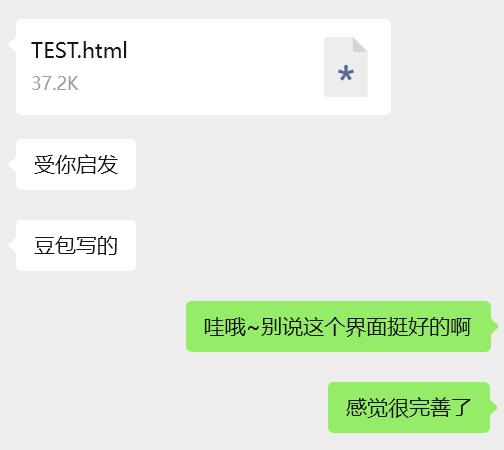
Some knowledgeable friends argue that Vibe Coding is a way for professional programmers to slack off, not a tool for novices. However, this is not entirely true.
Once Vibe Coding became popular, unskilled business owners developed unrealistic fantasies about AI programming. Programmers have complained that their bosses recently activated Copilot enterprise accounts and drastically reduced project timelines by 70%, reasoning that “AI can help you write code.” Instead of slacking off, hidden overtime has increased because not only are deadlines tighter, but developers also have to clean up after AI, leading to the issue of technical debt.
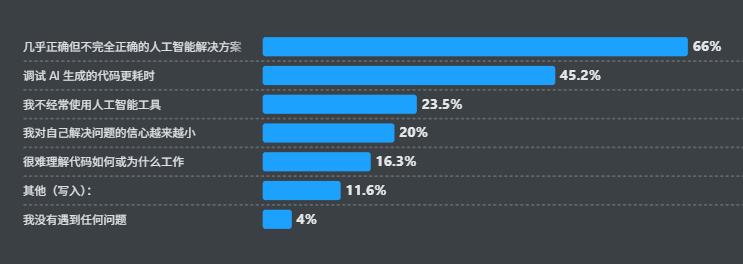
Typically, professional programmers prepare context for the agent to help AI understand tasks. However, many Vibe Coding tools still overcomplicate things, adding unnecessary backup plans that inflate code volume. As conversation rounds increase, low-quality information and errors accumulate, leading to context decay and worsening output. In complex projects, this decay makes corrections and maintenance more challenging. A survey revealed that 45% of developers feel frustrated when debugging AI-generated code.
The Burden of Technical Debt
If software engineering relies on a mountain of code, then Vibe Coding, which generates nearly 100% of code through agents, acts like a fully automated code generator requiring programmers to guide, correct, and manage every step, creating new workloads. “The amount of manual work equals the amount of intelligence” applies here as well.
Blindly believing that Vibe Coding simplifies development can inadvertently increase pressure on IT teams and programmers.

Independent developers might avoid technical debt by not dealing with complex enterprise software. They can create simpler applications like weather forecast mini-programs or to-do list apps, thus sidestepping issues like code redundancy and context decay.
However, these simple applications can easily flood the market. In Southeast Asia, numerous projects generated quickly through Coding Agents have taken subscription fees and vanished, leaving behind a slew of unmaintained disposable applications, turning the software industry into a digital wasteland.
Despite the appealing notion of Vibe Coding, delivering a complete and complex project still requires substantial human assistance; 100% agent-generated code is unrealistic.
The Misconception of Vibe Coding
Critics may argue that if Vibe Coding seems ineffective, it’s simply a matter of not using it correctly. Generating a simple game like Tetris can indeed work, and AI-written code can be sound.
Some cite industry data, such as the projected layoffs in the U.S. tech sector exceeding 0 by 2025, or the massive layoffs at Infosys in India, claiming that AI programming is replacing basic programmers and that Vibe Coding holds disruptive value.
While these situations are factual, the wishful thinking behind Vibe Coding is unlikely to become mainstream in the short term. Why?
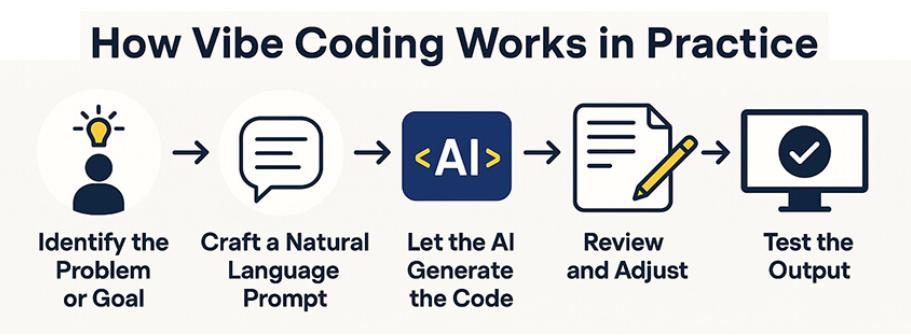
Successful cases, like generating Tetris or Snake games with one sentence, often involve simple applications using preset templates, which are not challenging to implement and lack significant commercial value. They are far removed from the robust systems that businesses and individual users truly need.
How many users are still looking for a Tetris game? Which company would pay for such a simple application? Enterprise-level applications involving industry logic, user permission management, data flow, concurrent processing, and third-party payment interfaces require extensive engineering details that cannot be resolved with a single sentence from a Coding agent.
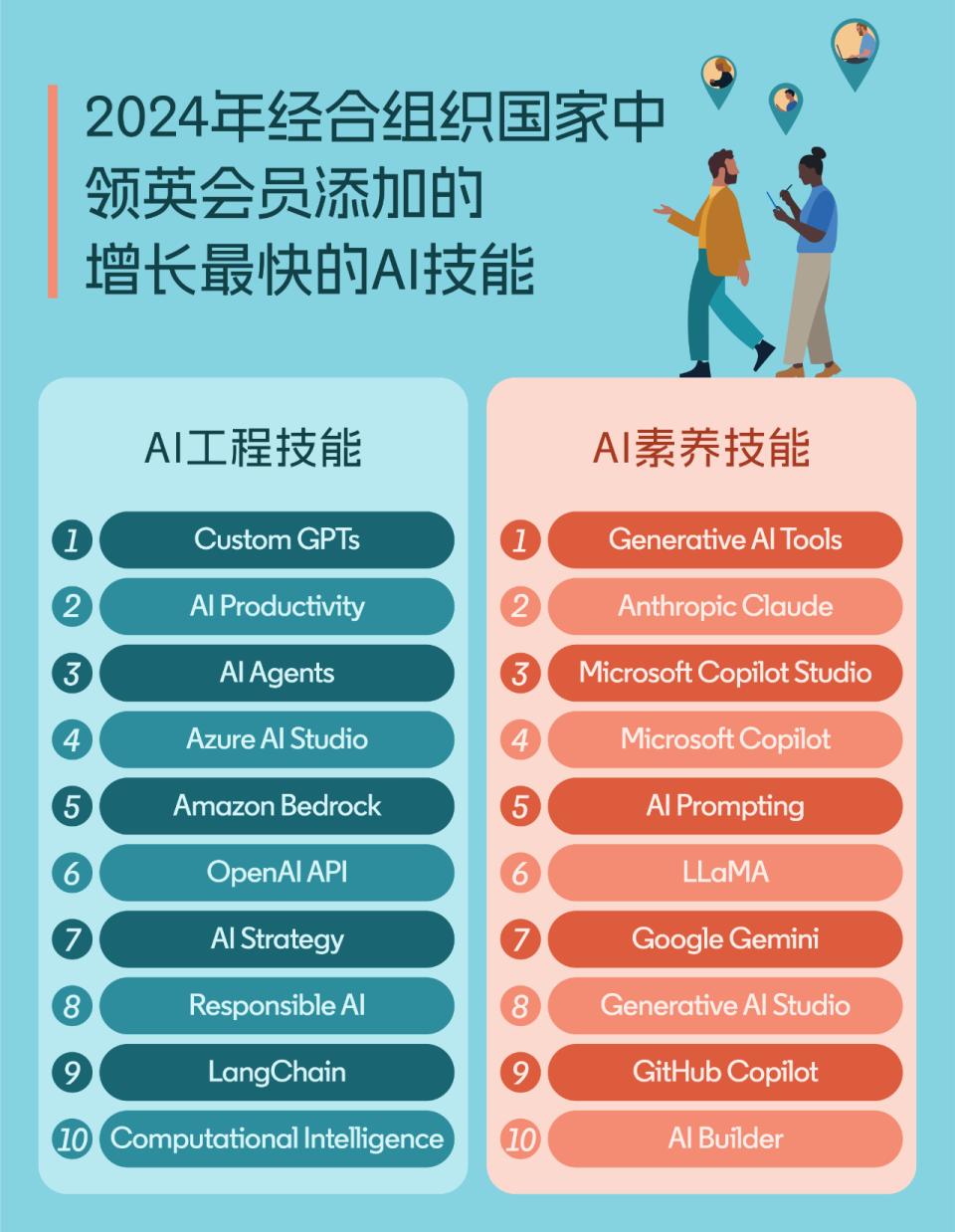
The so-called wave of programmer unemployment actually highlights that AI cannot replace high-level programmers. Changes in the skills demanded in the job market confirm this; for instance, the requirements for SDE 1 positions in North American tech companies have evolved from “being able to write good code” to “being able to collaborate with AI to solve complex problems.”
Some tech companies now seek candidates who not only know how to use AI programming tools but also retain the ability to write code manually, understand business needs, assess AI-generated code, and possess systematic thinking skills akin to an architect. This demand for advanced engineers has driven salaries higher.
From this perspective, Vibe Coding has not disrupted the software development industry; it has merely accelerated the polarization among programmers. The barrier to entry has shifted from merely writing code to using AI, understanding business, and having aesthetic sensibility.
The Hype Behind Vibe Coding
Given that Vibe Coding is not as miraculous as portrayed, why has it become a sensation in the industry?
A programmer friend lamented that the illusion of AI programming doesn’t affect the overall picture; a slight delusion on the part of bosses can lead to chaos.
The rise of Vibe Coding can be seen as a collaboration between AI programming platforms and the developer community’s FOMO (fear of missing out) mentality.
Emerging technological concepts often come with bubbles; it is natural to have them. By carefully designed demonstration scenarios, the public is led to believe that “everyone can program,” attracting more users and fostering a virtuous cycle in the tech ecosystem. For example, Cursor and ChatGPT Plus have set high monthly fees, requiring a growing user base, naturally promoting the slogan of “one sentence development.”
The problem lies in not just feeding everyone bubbles; there must be substance behind it.
Some startups exaggerate the magic of one-sentence coding. For instance, the unicorn Builder.ai used pre-recorded demos and fabricated an AI assistant named “Natasha” to secure $1.6 billion in investments from top firms like SoftBank and Microsoft over eight years. Despite ultimately collapsing due to financial fraud, this model has been widely emulated in the industry, fueling public technological fantasies.
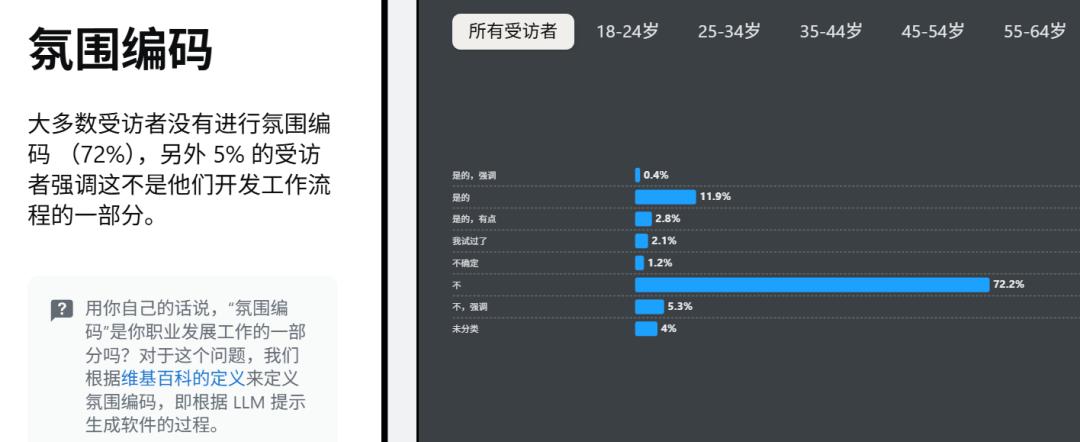
Many startups claim that 95% of their code is generated by AI, packaging such cases into a “zero-code startup myth” that spreads widely. In reality, by 2025, the vast majority of developers (72%) will not engage in Vibe Coding.
A Stack Overflow survey from 2025 shows that Coding Agents are not mainstream; most developers (52%) either do not use agents or stick to simpler AI tools. The so-called industry trend is clearly exaggerated by promotional rhetoric.
The Underlying Crisis
The popularity of Vibe Coding is also fueled by a deep-seated sense of professional crisis among programmers.
In the layoffs at giants like Meta and Microsoft, 70% of those let go were junior programmers. Faced with this survival threat, developers, even knowing that Vibe Coding generates technical debt, feel compelled to turn to tools like Vibe Coding for self-preservation. Data shows that programmer satisfaction with AI has dropped from 77% in 2023 to 72% in 2024, and this year it stands at only 60%, reflecting a contradictory mindset of “not fearing being left behind, but fearing being taken advantage of.”
The herd mentality in the tech community further amplifies this effect. As AI media and KOLs discuss Vibe Coding daily, a pressure builds that “everyone is using it, and not using it means falling behind.” However, trends and reality often have a time lag. Generally, media and KOLs prefer to focus on sensational news to attract traffic and attention, while these advanced technologies are still far from practical application.
Just as a new drug cannot claim to cure all ailments without providing strict indications and side effect warnings, Vibe Coding should not promise to handle everything with a single sentence. Software engineering has never been as simple as writing code and getting it to run; it requires an understanding of business, respect for rules, and a commitment to quality.
The slogan of “one-sentence generation” obscures the risks of technical debt associated with Vibe Coding and overlooks the professional skills of developers. As Vibe Coding becomes a generator of code mountains, disposable applications, and unfinished projects, perhaps it’s time for this industry celebration to cool down.
Comments
Discussion is powered by Giscus (GitHub Discussions). Add
repo,repoID,category, andcategoryIDunder[params.comments.giscus]inhugo.tomlusing the values from the Giscus setup tool.